

In September, researchers from the United States and Germany gathered in Berlin for a symposium exploring the molecular and cellular mechanisms underlying neurodevelopmental and neuropsychiatric disease.
Photo: Symposium speakers and attendees gather for a group photo on the Freie Universität Berlin campus.
Hosted by the Quantitative Biosciences Institute (QBI) at UCSF and Freie Universität Berlin (FUB), the "Molecular Mechanisms of Neuropsychological Disorders" symposium took place on September 14, 2026, at Freie Universität Berlin, bringing together researchers from both institutions and from universities and research organizations across Germany. The meeting provided an opportunity to exchange ideas, highlight complementary areas of research, and explore how different approaches are helping advance our understanding of neurodevelopmental and neuropsychiatric disease.
Researchers working across autism, brain development, synaptic biology, structural biology, proteomics, infectious disease, and systems biology contributed to the discussion. The range of topics reflected the breadth of research represented across the participating institutions, while creating opportunities to explore where different areas of expertise and technology intersect.
The symposium is part of a growing scientific relationship between QBI and FUB, connecting researchers around shared interests and creating opportunities for new and continued collaborations across institutions and disciplines.
A Broad View of Neuropsychiatric Research
The program moved across several areas of research, from autism and human brain development to the molecular machinery involved in neuronal communication.
Matthew State and Tom Nowakowski of UCSF presented work related to protein-protein interaction mapping, autism and human brain development, while Amparo Acker-Palmer of Goethe University Frankfurt discussed the role of blood vessels in neural development.
Several presentations focused on the synapse and the molecular machinery involved in neuronal communication. Thomas Söllner of Heidelberg University, Noa Lipstein of FMP Berlin and Einar Krogsaeter of UCSF presented work on neuronal exocytosis, presynaptic mechanisms and synaptic proteostasis. Christian Freund and Xiao Jakob Schmitt of FUB examined disease-associated mutations in the synaptic vesicle release machinery.
Other researchers approached autism-associated biology through model systems and structural approaches. Stephan Sigrist and Melanie Grieger of FUB discussed work using Drosophila to characterize autism-associated mutations in vivo, while James Fraser and Kliment Verba of UCSF presented research spanning statistical structural biology, neuropsychiatric drug discovery and SynGAP mutations in autism spectrum disorder.
The program also extended beyond neurodevelopmental biology. Melanie Ott of the Gladstone Institutes discussed the neuropsychiatric consequences of viral infections, and Rasika Vartak of UCSF presented work from the Psychiatric Cell Map Initiative, which is mapping protein interaction networks across neuropsychiatric disorders.
Rather than centering on one disease, model or technology, the symposium brought these different areas into the same conversation. For participants, this offered a chance to learn not only about individual research programs, but also about the range of expertise and capabilities available across the broader group.
From Shared Interests to New Possibilities
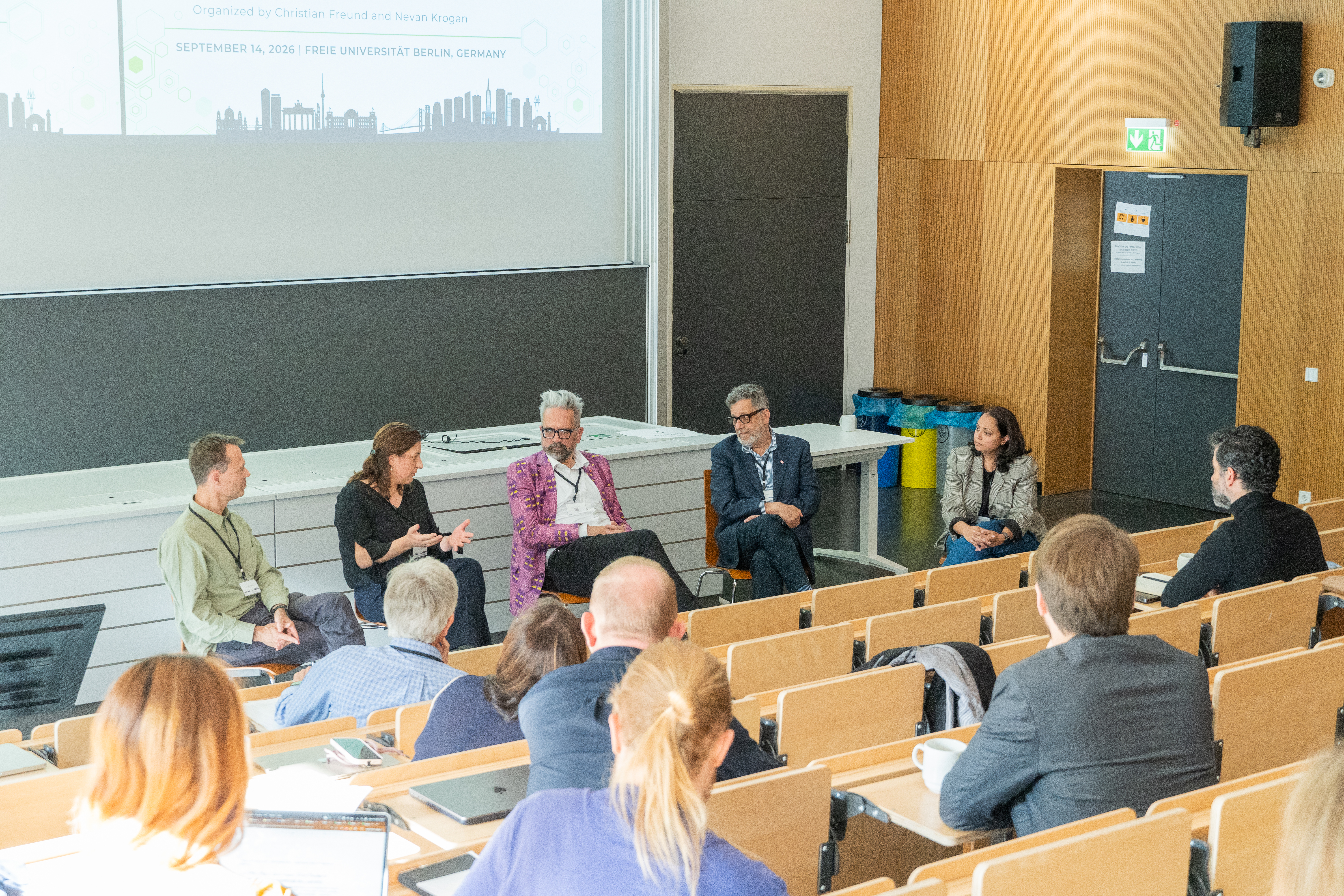
That breadth also shaped the discussions around the scientific program.
The panel “From Variant to Synapse: Closing the Gap,” featuring Christian Freund, Matthew State, Noa Lipstein and Nevan Krogan and moderated by Reshmi Tognatta, brought together several of the themes represented throughout the day. The discussion focused on the challenge of connecting disease-associated variants with the molecular, cellular and synaptic mechanisms involved in disease.
Additional post-event discussions introduced participants to Aligning Research to Impact Autism (ARIA), including its current work, research pipeline and remaining gaps, as well as the capabilities and platforms of QBI's READY Center. Participants also discussed the broader research landscape in Berlin and Germany.
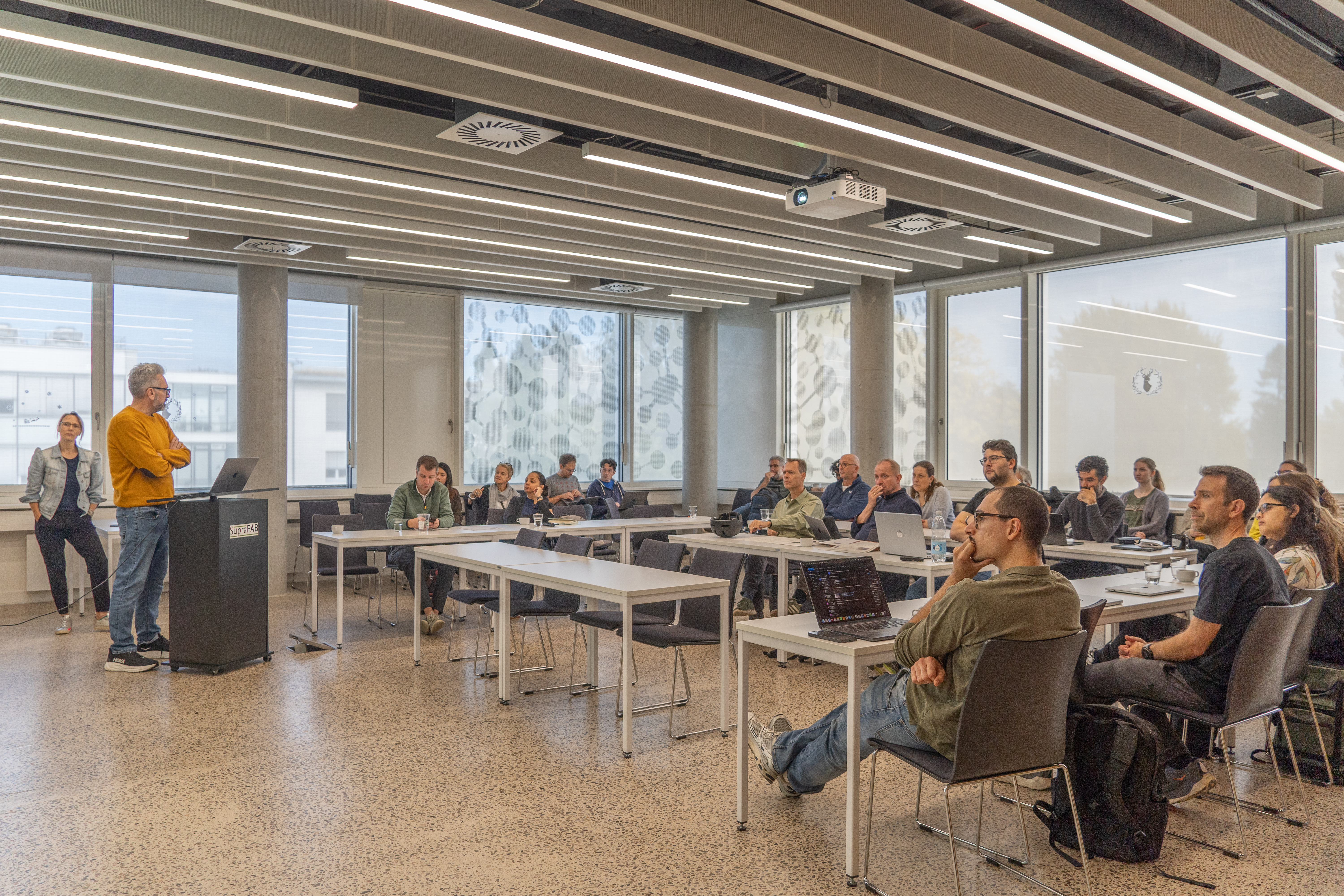
These conversations provided a more practical opportunity to consider how research programs, technologies and expertise represented at the meeting might complement one another. They also gave researchers a chance to identify areas of shared interest that could warrant further discussion.
For a meeting built around bringing different research communities together, these exchanges were an important part of the program. The scientific presentations provided a view into the work being done across the participating groups; the discussions created space to consider where those areas might connect.
Continuing a Growing Partnership
The symposium builds on an ongoing relationship between QBI and FUB that has brought researchers together around quantitative biosciences, structural biology and the molecular basis of disease.
That relationship has continued to develop through scientific exchange and collaboration, including the joint work associated with Nevan Krogan's role as an Einstein Visiting Fellow at FUB. The fellowship has brought together researchers from UCSF and FUB around research in autism and epilepsy, with expertise spanning structural proteomics, mass spectrometry, cryo-electron microscopy and AI-driven analysis.
The September meeting brought a wider group of researchers into that conversation.
For QBI and FUB, the value of meetings like this lies in creating opportunities for researchers to see the breadth of work happening across institutions, identify areas of shared interest and begin conversations that may develop further over time.
The Berlin symposium provided a snapshot of that growing connection and created a space for a group of researchers working across different fields, models and technologies, to come together around a common interest in understanding neurodevelopmental and neuropsychiatric disease.
